By the AIS Insights team
Here's the short answer. To see which competitor brands AI assistants recommend most often manually, here is what you would do:
- Write down 10 to 20 questions your customers would ask an AI assistant.
- Ask each question three times on ChatGPT, Google AI Overviews and Google AI Mode.
- Write down every brand named in every answer.
- Count how often each brand appears, including yours.
That's the manual way. It's fine for a quick look, but it isn't the right way to answer the question.
AI answers change every time you ask. The models behind them are updated every few months, and when they are, the brands they recommend can change overnight. A spreadsheet you filled in last month may already be wrong.
The right way is to track it automatically. A tool like AIS Insights asks your questions every day, across the AI assistants your customers use, and keeps a record of every answer. That's the only way to see a real pattern, and to spot the moment a competitor overtakes you.
This guide explains why the manual way falls short, what automated tracking shows you, and how to read the numbers.
What it means when AI recommends a brand
When someone asks an AI assistant “what's the best bean-to-cup coffee machine under £500?”, it doesn't show ten blue links. It writes an answer and names a few brands, often three to five.
That short list works like page one of Google, but with far fewer places on it. If you're on it, you're in the running. If you're not, the buyer may never hear of you.
A few terms you'll see in this guide:
- AI assistant: a tool people ask questions in, such as ChatGPT, Google Gemini or Microsoft Copilot. Google's AI Overviews (the AI summary at the top of some search results) and AI Mode (Google's chat-style search) count too.
- Prompt: the question someone types into an AI assistant. It's the AI version of a keyword.
- Mention: your brand is named in the answer.
- Citation: the AI links to a page as a source for its answer. That page could be yours, a competitor's, or a review site.
One thing to know up front: no one outside the AI companies can see what people actually type into these tools. There is no AI version of Google Search Console yet. Anyone who claims to show you real prompt volumes is estimating. That's why you have to track the questions yourself, and keep tracking them.
Why checking AI answers by hand doesn't work
Most people's first move is to open ChatGPT, ask a few questions and note which brands come up. That makes sense for a one-off snapshot. But it doesn't give you any meaningful data to act on, for five reasons.
- Answers change every time. Ask the same question twice and you can get a different list of brands.
- The models change. ChatGPT, Gemini and the rest are updated every few months. In our own tracking, we've seen the brands AI recommends shift sharply after a new model release. If you checked by hand last quarter, you're looking at an answer that may no longer exist.
- Answers are personal. ChatGPT remembers your past chats, and answers vary by country. What you see on your laptop isn't what your customer will see on theirs.
- It's very time-consuming. Checking 50 or so prompts by hand would take hours. Is that really an efficient use of time?
- You lose the history. The real question isn't “who's ahead today?” It's “who's gaining, and since when?” A one-off check can't tell you that.
One answer is an anecdote. The same brand in hundreds of answers, tracked over time, is a pattern.
We saw this first-hand when we tracked 50 prompts in ChatGPT every day. Our guide on how to track your visibility in ChatGPT shows what a one-off check misses.
How to see which competitor brands AI assistants recommend most often
The reliable way is to use an AI visibility tracking tool. It asks your questions on a schedule, records every answer, and counts which brands come up. Here's how we'd set one up.
Step 1: Choose the questions your customers ask
Most of your questions should not mention any brand, because those are where AI picks a winner. We'd aim for at least 7 in every 10 to be unbranded.
For example, if you sold coffee machines like Sage, your list might include:
- What's the best bean-to-cup coffee machine under £500?
- What's a cheaper alternative to a De'Longhi coffee machine?
- Which coffee machines are easiest to clean?
 ChatGPT · 5 November 2026
What's the best bean-to-cup coffee machine under £500?
If I were spending up to £500, I'd buy the De'Longhi Magnifica Evo. It's one of the strongest all-round bean-to-cup machines in this price range, offering very good coffee, straightforward controls and, in the right version, automatic milk frothing.
There are three machines I'd seriously consider.
My top 3 under £500
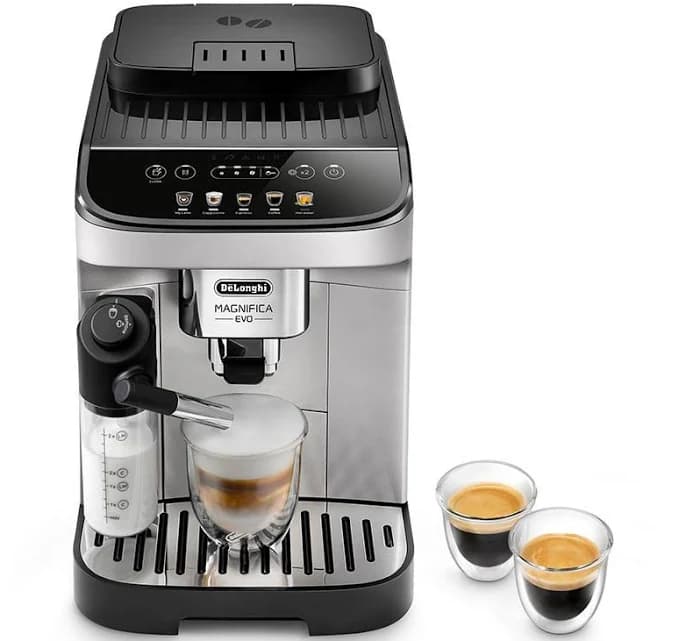
Best overall
De'Longhi DELONGHI Magnifica Evo ECAM290.61.SB Bean to Cup Coffee Machine
£345.00
Currys + others · Rated 4.5/5
Best for milk drinks
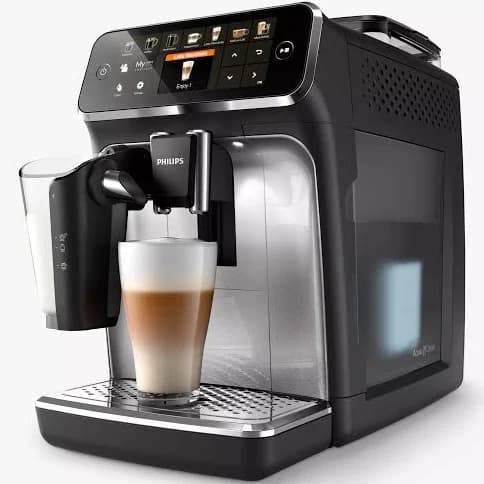
Philips EP5446/70 Bean to Cup Coffee Machine
£349.99
John Lewis + others · Rated 4.5/5
Best value
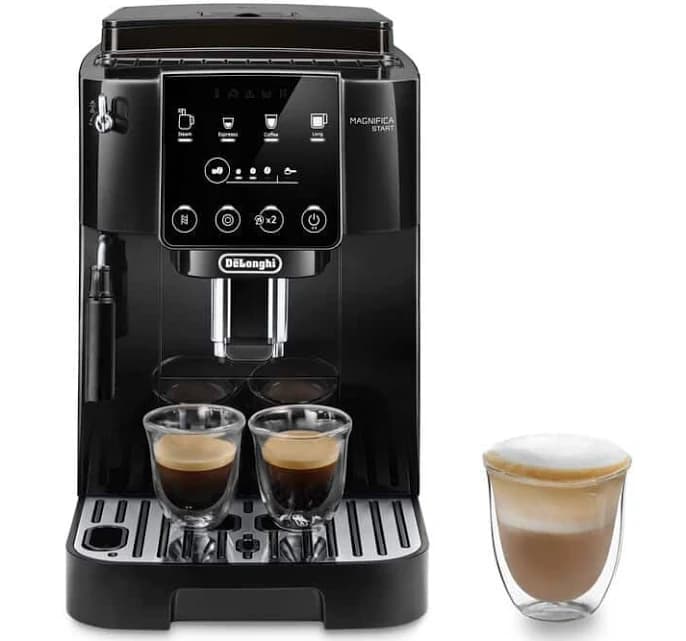
De'Longhi DeLonghi Magnifica Start ECAM220.22.GB Bean to Cup Coffee Machine
£319.99
UK - De'Longhi + others · Rated 4.8/5
De'Longhi DELONGHI Magnifica Evo ECAM290.61.SB Bean to Cup Coffee Machine
- Excellent everyday espresso.
- Automatic LatteCrema milk system.
- Easy-to-use controls.
- Removable brewing unit for cleaning.
My pick for a household wanting espresso, cappuccino and latte without much fuss.
Philips EP5446/70 Bean to Cup Coffee Machine
- LatteGo automatic milk system.
- Lots of drink options.
- Particularly easy milk-system cleaning.
- Good choice for cappuccinos and lattes.
I'd choose this if you regularly drink milk-based coffees.
De'Longhi DeLonghi Magnifica Start ECAM220.22.GB Bean to Cup Coffee Machine
- Great straightforward coffee.
- Built-in grinder.
- Traditional manual milk frother.
- Good value for money.
Ideal if you mainly drink espresso or Americano and don't mind frothing milk yourself.
These choices are consistent with recent reviews from BBC Good Food and The Guardian.
One question that would help me narrow it down
What sort of coffee do you drink most?
I can then narrow it down to the one I'd actually spend my money on.
Sources cited
Ask again tomorrow and you may get a different list. That's why one check isn't enough.
The best sources are your own: questions from sales calls, support tickets, and the “People also ask” box in Google. For a small brand, 30 to 50 questions across 3 to 5 topics is a good start. Larger brands usually need 100 to 200. We cover this step in detail in our guide on how to choose the right prompts to track in AI search.
Step 2: Choose the AI assistants to track
For most brands, track ChatGPT, Google AI Overviews and Google AI Mode. We think AI Mode will become the default way people search on Google, so it's worth tracking now. If you sell to other businesses, add Gemini, Microsoft Copilot and Claude. You can see how each one works on our AI models page.
Step 3: Add your competitors, then watch for new ones
Add the competitors you already know about. Then pay attention to the brands that keep appearing that you didn't add. AI often recommends brands your sales team has never treated as competitors.
Most tools only track the competitors you choose. AIS Insights also shows you the brands you're not tracking yet that keep appearing in answers. If one looks like a real competitor, you can add it in one click.
Step 4: Let it run, and keep the same questions
Daily tracking smooths out the randomness of individual answers. Keep your core questions the same over time. If you change them every month, you can't tell whether you improved or just asked easier questions.
If you've just set up tracking, give it at least two weeks before you start looking for patterns in your competitors. The first few days are too noisy to act on.
Step 5: Read the competitor ranking
After two weeks or more, you'll see a ranked list of the brands AI names most often, on each assistant and for each question. The brands at the top are the competitors AI recommends most. The next section explains how to tell whether they're ahead of you.
How do I know if my competitors are being mentioned more often in AI results than my brand?
Look at how often each brand appears across the same set of answers. If a competitor is named in more answers than you, and named earlier in each answer, they're being mentioned more often, and AI sees them as the safer recommendation.
Go back to the coffee machine question from Step 1.
| Brand | Times mentioned |
|---|---|
| De'Longhi | 5 |
| Philips | 1 |
| SageYou | 0 |
De'Longhi leads this answer, named 5 times and before any other brand.
Sage isn't named at all, so someone reading this answer would never hear of it.
A tracking tool does this counting for you across every question, every assistant and every day. It turns the results into two numbers: visibility, how often a brand appears at all, and share of voice, how much of the conversation it owns. You don't need to work these out yourself.
Here's how that competitor ranking looks in AIS Insights:
| # | Brand | Visibility | Share of voice | Citation share | Mentioned | More |
|---|---|---|---|---|---|---|
| 1 | De'Longhi | 50% | 0% | Yes | ||
| Citation share 0%Mentioned Yes | ||||||
| 2 | Philips | 50% | 0% | Yes | ||
| Citation share 0%Mentioned Yes | ||||||
| 3 | SageYou | 0% | 0% | No | ||
| Citation share 0%Mentioned No | ||||||
There's a third number worth knowing once you're comfortable: citation share. That's how often AI links to a brand's own website as a source. A brand can be mentioned a lot but never cited, which means AI talks about them but doesn't trust their content. See how AI citation tracking measures this.
One more thing. Do this question by question, not just in total. You might lead overall but lose every question about price, or every question about one product. That's where the useful detail is.
The same goes for topics. A topic is a group of related questions, such as every question about bean-to-cup machines, or every question about espresso machines. Your competitors can be different in each one. In the answer above, De'Longhi and Philips are the brands named for bean-to-cup machines. Ask about espresso machines and a different brand might lead, one your overall numbers would never have shown you.
So group your questions into topics, and read the competitor ranking for each one. AIS Insights shows every competitor's visibility topic by topic and prompt by prompt, so you can see who you're really up against in each part of your business.
What to do when a competitor is ahead
The reason a competitor gets recommended is usually in the links. A good tracking tool shows you the sources behind every answer. They tell you where AI learned that your competitor is a good choice. To see the searches ChatGPT runs before it answers, try our free query fan-out tool.
We see four types of source come up again and again:
| Where the competitor shows up | What it means | What you can do |
|---|---|---|
| Their own guides and help pages | They've written the answer to the question, and you haven't | Write a clearer, more complete answer on your own site |
| Review and comparison sites | Other people vouch for them | Get listed and collect reviews on the same sites |
| Reddit and forums | Real users recommend them | Join those conversations honestly, as yourself |
| News and industry articles | Journalists mention them | Treat those publications as PR targets |
The first one surprises most people. In our own tracking, we regularly see a brand recommended because AI is quoting that brand's own how-to guide. They didn't win with advertising. They won by answering the question first.
Don't try to fix everything at once. Start with questions that have clear buying intent, where your product genuinely solves the problem, and where the same competitor keeps beating you.
You don't have to work this out on your own. The AIS agent sits inside your AIS Insights dashboard and reads your live data. Ask it why a competitor is ahead, or which sites cite them and not you, and it traces the answer to the prompts, models and sources behind it. Then it tells you where to focus first, so you know what to do to get ahead of the competition.
FAQ
How can I monitor my competitors' performance in AI search?
Use an AI visibility tracking tool. Give it a fixed set of customer questions and your list of competitors, and it records which brands are named in every answer. Over a few weeks you'll see who is gaining and who is slipping.
Can I track this by hand?
You can spot-check by hand, and it's a useful way to see the problem for yourself. But answers and models change too often for a few manual checks to tell you anything reliable.
Why does AI recommend my competitor when we rank higher on Google?
Ranking on Google and being recommended by AI are different things. AI pulls from a wider mix of sources, including review sites, forums and competitors' own guides. You can be first on Google and still be missing from the AI answer.
Do I need to check every AI assistant?
No. Start with ChatGPT, Google AI Overviews and Google AI Mode. Add Gemini, Copilot and Claude if you sell to other businesses.
How often should I check?
Your tool should check every day, because answers move from day to day. You don't need to look every day, though. Reviewing the trend once a week is enough for most teams.
What's the difference between a mention and a citation?
A mention is when AI names your brand in its answer. A citation is when AI links to a page as its source. The best position is both: AI recommends you and uses your own website as proof.